Forecasters are watching one of the strongest El Ninos on record set up in the Pacific. For California, that usually means rain.
The outlook favors above normal precipitation for the state, and the wettest stretch is expected to land in January, February, and March. Fall is expected to stay fairly dry.
That gap is the useful part. You have a few months of dry ground to fix the things that go wrong when it pours.
What a Wet Winter Actually Does to a Foothill Property#
Up here it is not the rain itself. It is where the water goes once it lands.
Water finds the low spot, the bare slope, and the blocked pipe. Then it takes soil with it. A gutter that overflows for three months quietly soaks the ground against your foundation.
None of that is dramatic on day one. It just gets worse every storm.
Clear the Gutters, Then Check Where They Dump#
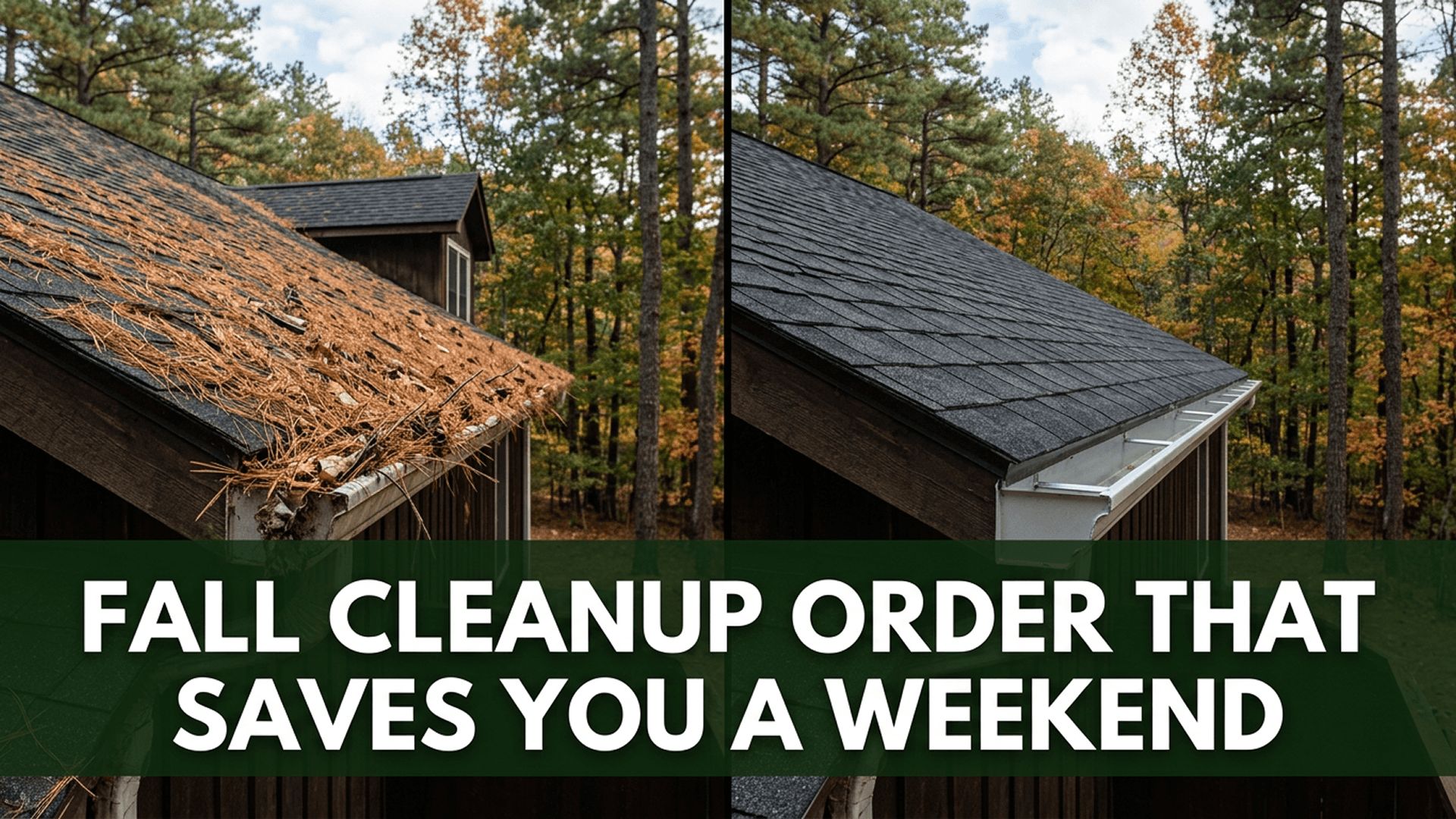
Around Nevada City and Grass Valley, gutters fill with pine needles, not leaves. Needles pack tighter and drain slower.
Clear them after the needle drop finishes, usually late October or early November. Clearing in September means doing it twice.
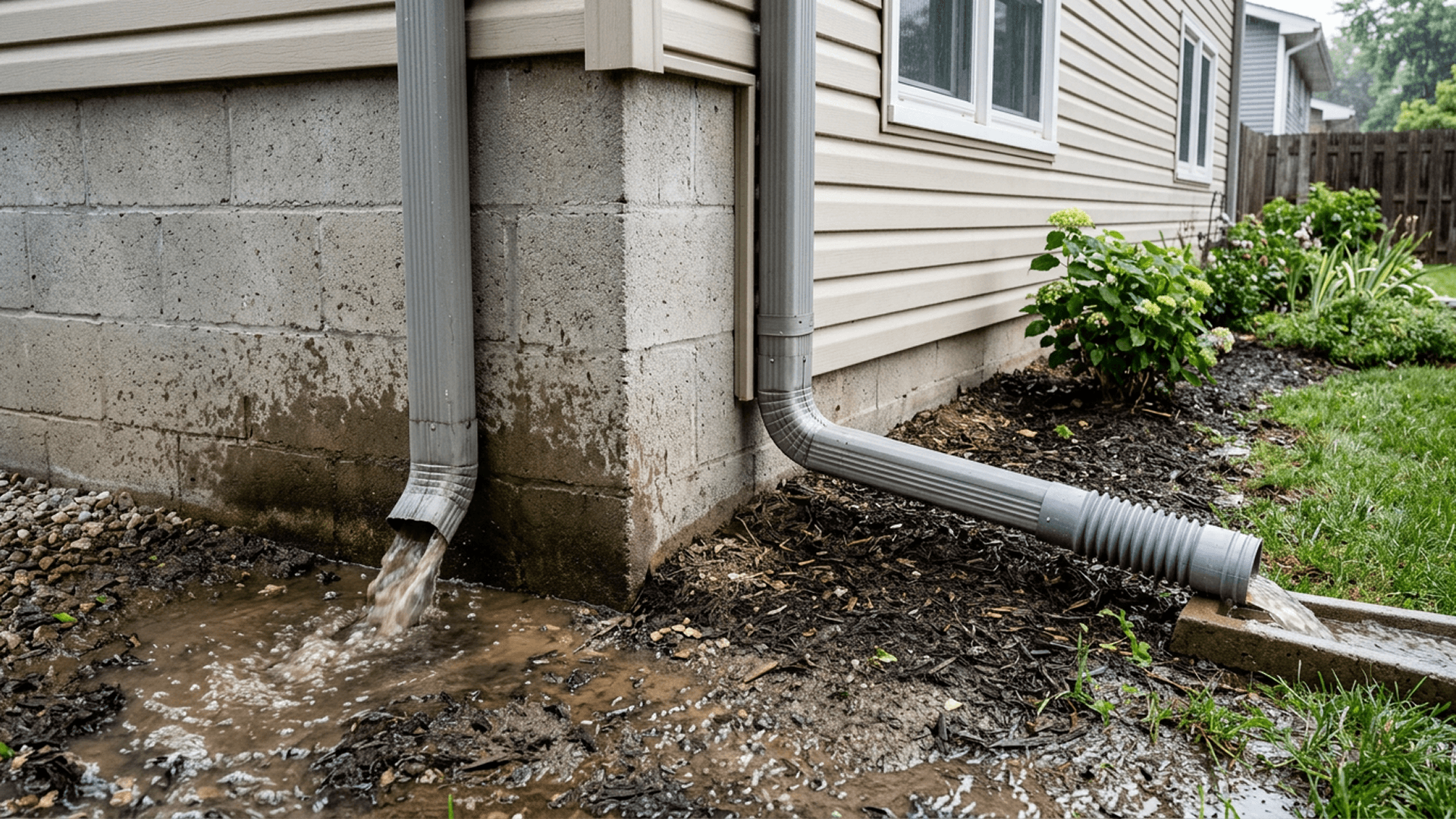
Then follow the water. Run a hose down each downspout and go look at where it comes out. If it empties within a few feet of your foundation, extend it. That is a cheap fix now and an expensive one later.
Walk Your Driveway and Ditches#
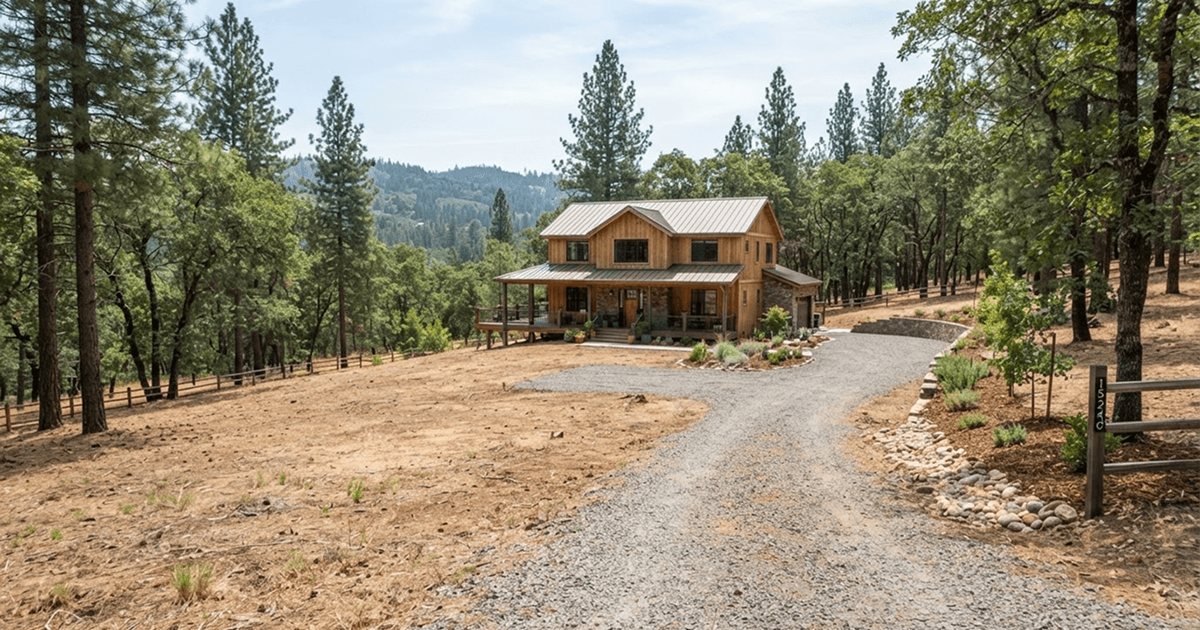
Long gravel driveways are the first thing to go in a wet winter. Water runs down the track, cuts a channel, and takes your gravel with it.
Clear the roadside ditches and culverts now. A culvert packed with needles and dirt is the same as no culvert at all.
If you already know the spot where your driveway washes every year, this is the fall to deal with it rather than regrading in February.
Bare Slopes Need Cover Before the Rain#
If you cleared brush this summer, some of your ground is now bare. Bare dirt on a slope is the single biggest erosion risk on a foothill property.
Cover it. Straw mulch, wattles across the slope, or a cover crop seeded early enough to root. Doing nothing means watching your topsoil end up in the ditch.
This is worth real attention in a year like this one.
Deal With the Limbs Now#
Wet snow and saturated ground bring down branches that survived every dry year before.
Look up. Anything dead, cracked, or leaning over your roof, your driveway, or your power drop is a winter problem waiting to happen.
Taking a limb down in October is ordinary work. Taking it off your roof in January is an emergency, and everybody in the county is calling the same people that week.
Do Not Skip the Fire Work#
A wet winter is not a free pass. Rain grows grass, and grass dries out by June.
Wet years often mean heavier fuel loads the following summer. Keep up your defensible space through the winter instead of letting it slide and starting over in spring. Our breakdown of defensible space costs covers what the county expects.
The Short List#
- Gutters and roof. Clear after needle drop finishes, not before.
- Downspouts. Follow the water and move it away from the foundation.
- Ditches and culverts. Open them up while they are dry.
- Bare slopes. Cover with straw, wattles, or seed.
- Limbs. Take down anything dead over the roof or driveway.
- Defensible space. Keep it up through winter.
Get It Done While the Ground Is Dry#
Every one of these is an ordinary job in October and a miserable one in February.
We handle the whole list on properties across Nevada County. See what our winter maintenance covers, or ask for a free estimate. Send a photo of the problem spot and Jay will follow up with a price. You can also call (530) 210-3990.